


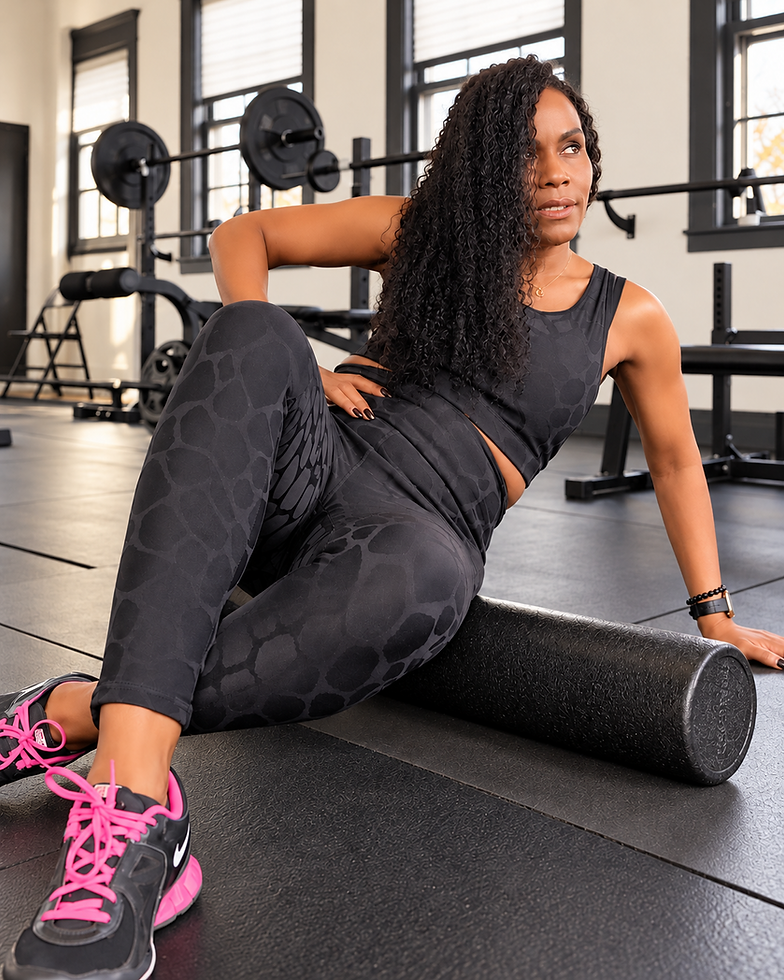
The Hardest Part of an Injury: Learning to Listen to Your Body
Being injured is frustrating.
But I’m realizing that sometimes the hardest part of an injury isn’t actually the pain.
It’s learning to stop.
When you’re someone who is used to moving, working out, teaching, training and pushing through difficult things, rest doesn’t always come naturally.
We’re taught that consistency matters.
Show up.
Keep going.
Push yourself.
Don’t make excuses.
And while I believe deeply in all of those things, injury has reminded me that there is another kind of discipline that is just as important:
Knowing when your body is asking you to slow down.
Listening Is Different From Giving Up
There is a big difference between being uncomfortable because something is challenging and experiencing pain because your body is telling you something isn’t right.
Learning that difference is important.
Research on exercise and injury consistently shows that our bodies have a certain capacity for stress and training. When we continually ask the body to handle more than it is currently prepared for, the risk of injury or aggravating an existing injury can increase.
And that capacity isn't the same every day.
Sleep matters.
Stress matters.
Recovery matters.
Previous injuries matter.
What your body could handle last month—or even last week—may not be what it can handle today.
That can be difficult to accept.
Especially when mentally you feel ready to go.
Rest Does Not Mean You Are Losing Progress
This is probably one of the hardest things for active people to believe.
You take a few days off and immediately start thinking:
I'm losing strength.
I'm getting out of shape.
I should probably do something.
Or my personal favorite:
“Let me just test it and see how it feels.”
Sometimes that little test is exactly what reminds you that your body isn't ready yet.
Rest and recovery aren't separate from fitness.
They are part of fitness.
Research continues to show how important sleep, nutrition, hydration and appropriate recovery are for physical performance and healing.
The body needs time to repair itself.
And sometimes the most productive thing you can do is allow that process to happen.
Rest Doesn't Always Mean Doing Nothing
There is another important part of this conversation.
Rest doesn't necessarily mean lying in bed until everything feels perfect.
Depending on the injury and where you are in the healing process, gentle movement and gradually returning to activity can be very important.
Current injury-recovery research generally supports gradually reintroducing appropriate movement and load rather than remaining completely inactive for long periods of time.
The important word is:
Gradually.
Recovery may look more like:
Protect. Recover. Move. Reassess. Build. Progress.
Not:
Feel a little better. Do everything. Hurt again. Start over.
And yes—I know how tempting that second option can be.
Recovery Isn't Always a Straight Line
This may be one of the most frustrating parts.
You can wake up one morning feeling dramatically better and think:
Finally! I'm back!
Then you do a little too much and suddenly your body reminds you that you're still healing.
That doesn't necessarily mean you're back at square one.
Recovery doesn't always happen in a perfectly straight line.
There can be good days and bad days.
There can be progress followed by soreness.
There can be days when you feel almost normal and others when you're reminded very quickly that you're not quite there yet.
The goal is to pay attention to those signals instead of ignoring them.
Injury Is Mental Too
I don't think we talk enough about this part.
When exercise is a major part of your life, an injury affects much more than your body.
Exercise may be your routine.
Your stress relief.
Your social outlet.
Your work.
Your confidence.
Your time for yourself.
For some of us, it is simply part of who we are.
Research into sports injuries has shown that the mental side of recovery matters too. Fear of getting hurt again, frustration, loss of confidence and anxiety about returning to activity can all influence the recovery process.
So returning isn't only about asking:
“Can my body do this?”
It's also about asking:
“Do I trust my body to do this again?”
That confidence may take time to rebuild too.
Sometimes Strength Looks Like Rest
This has probably been my biggest lesson.
I believe in working hard.
I believe in challenging yourself.
I believe in showing up when you don't necessarily feel like showing up.
I believe in getting stronger.
But I'm realizing that strength doesn't always look the same.
Sometimes strength is lifting heavier.
Sometimes it's getting through the final rep.
Sometimes it's getting out of bed before sunrise and showing up anyway.
And sometimes strength is admitting:
My body needs more time.
Sometimes discipline means doing the workout.
And sometimes discipline means not doing it.
That second one might actually be harder.
Because resting requires patience.
It requires trusting the process.
And it requires accepting that giving your body time to heal isn't weakness.
It's an investment in being able to do the things you love again.
At SkyeFitness, one of the things I live by is:
I can. I will.
Right now, I will looks a little different.
I will listen to my body.
I will give it the time it needs.
I will respect the recovery process instead of rushing it.
And when my body is ready…
I will come back.
Maybe a little more patient.
Definitely a little wiser.
And hopefully with a much greater appreciation for something that can be harder than any workout:
Knowing when it's time to rest.


Comments